Some Men Don’t Look for Companionship. They Shop for Women.

Many people assume that escort enquiries are all the same. They are not. After dealing with countless conversations over the years, a fascinating pattern starts to appear. The first message often reveals far more than the booking itself. Some men approach escort services and agencies with hesitation, respect, and genuine curiosity. Others arrive with entitlement, objectification, and a purely transactional mindset. The difference is rarely about wealth, education, or language. It is about how a woman is viewed in the client’s mind. This article explores the psychology behind escort service enquiries, client behaviour, respectful companionship, objectification, screening difficult clients, and the subtle signs that reveal whether someone is looking for connection, comfort, and company, or simply treating women like products to be consumed.
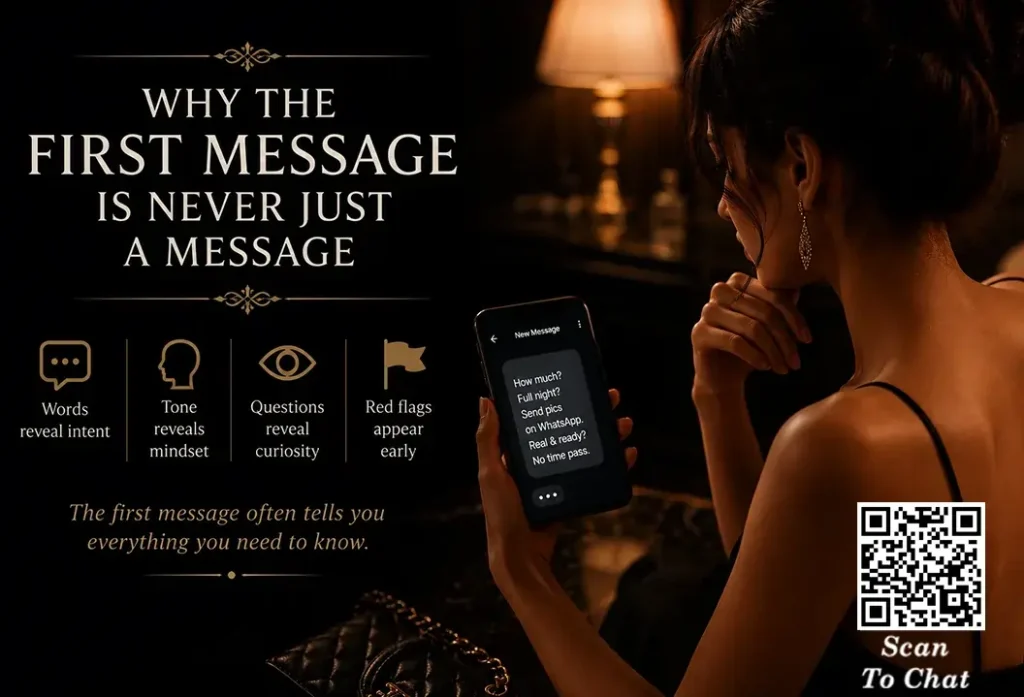
Why the First Message Is Never Just a Message
This is a very real thing in India and especially in Delhi.
Most clients don’t talk directly because escort services in Delhi/companion service are still surrounded by shame, fear, judgement, and legal/social confusion. So the way they speak tells a lot about their mindset.
1. Respectful but hesitant clients
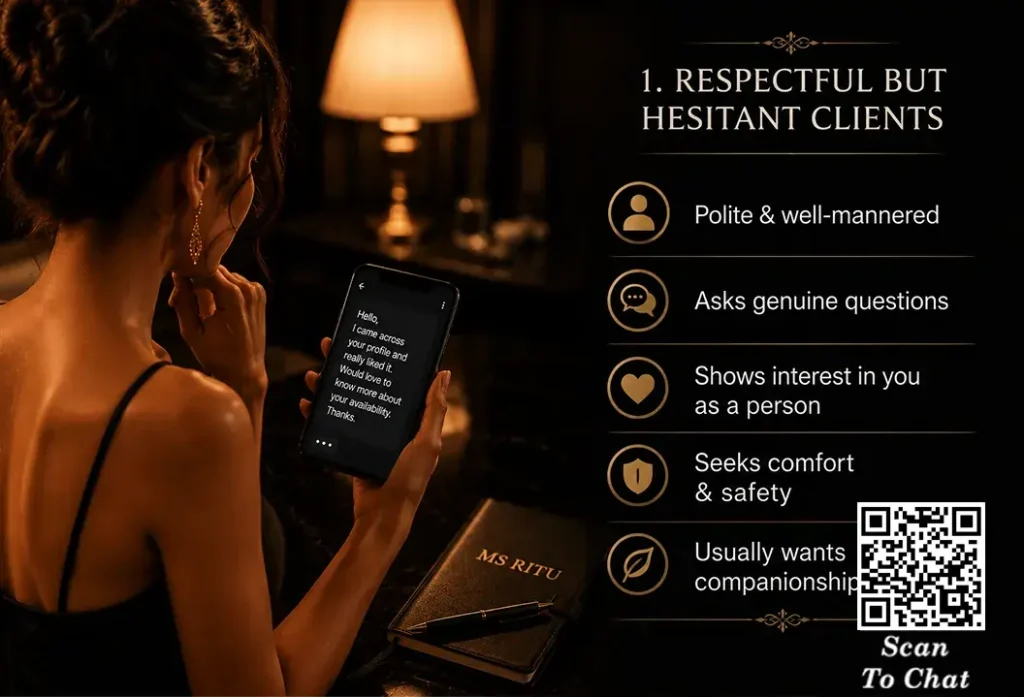
These are often the most genuine ones. They may need companionship, privacy, emotional comfort, travel company, dinner date, hotel meeting, or simply someone elegant to spend time with — but they feel awkward saying it.
They usually say things like:
- “Hi, is this service available?”
- “Can you explain the process?”
- “I am new to this, so please guide me.”
- “I need a companion for dinner / travel / private meeting.”
- “Is everything discreet?”
- “I don’t want any problem for the girl.”
- “Please tell me the charges and rules.”
- “I will respect whatever your terms are.”
Their tone is careful. They don’t jump like hungry dogs. They ask slowly. They may over-explain because they are nervous. Many decent men hesitate more because they don’t want to sound cheap, desperate, or disrespectful.
2. Rich but ego-heavy clients

These people may have money, but manners are sometimes missing from the package. They talk like money has made them emperor of India.
Common style:
- “Send best girl.”
- “Money no issue.”
- “I want premium only.”
- “I don’t negotiate, but I need full satisfaction.”
- “I am VIP, don’t waste my time.”
- “Show me real pics first.”
Not always abusive, but they test control. They want a fast response, instant proof, and royal treatment before showing basic respect. Some are genuine, but they need boundaries early.
3. Time-wasters and fantasy talkers

These are very common. They don’t intend to book. They only want free chatting, photos, details, or dirty conversation.
They ask:
- “Available now?”
- “Send pics.”
- “What all included?”
- “Can I see more photos?”
- “Can I talk to girl first?”
- “Tell me full service.”
- “Video call possible?”
- “Location?”
They keep asking but never confirm. Their language is slippery. They avoid payment, avoid booking clarity, and keep dragging the chat.
4. Abusive and disrespectful men
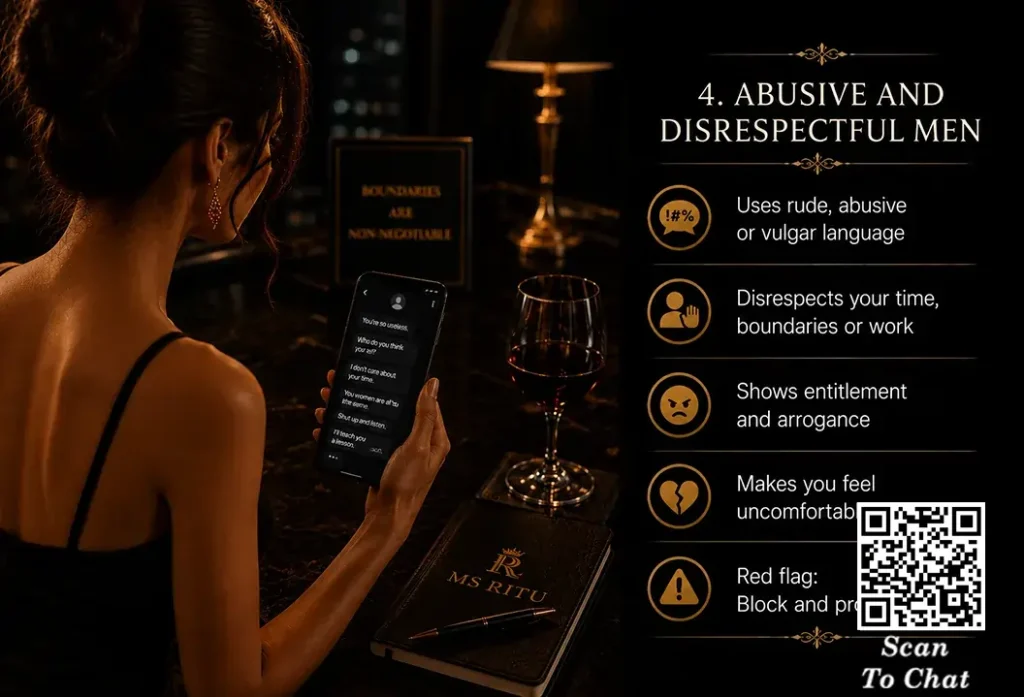
These are the dangerous category. They don’t see escort women as humans. They talk like they are ordering meat from a butcher shop. Their words are crude, demanding, and often insulting.
They may say things like:
- “Rate for one shot?”
- “Full night with everything?”
- “No drama, I paid so she must do all.”
- “I want young/fair/sexy item.”
- “Send body pics.”
- “What is allowed?”
- “Can I do anything?”
- “I need bold girl, no attitude.”
- “Don’t send fake, I will check properly.”
The main red flag is not just vulgar words. The real red flag is entitlement. They believe payment means ownership. That mindset is filth wearing shoes.
5. The “respectful abuser” type
This one is tricky. They start politely but slowly push limits.
Example pattern:
First: “Hi dear, I respect women.”
Then: “Can you send private pics?”
Then: “I am paying, why so many rules?”
Then: “Other agencies allow this.”
Then: “You people are attitude.”
This type uses fake sweetness first, then pressure. Very common. They test how much they can bend your rules.
How genuine clients usually behave
A genuine client usually has these signs:
- Accepts rules without drama
- Asks about privacy and process
- Does not demand cheap proof
- Talks clearly about time, place, and expectation
- Does not force explicit discussion
- Understands consent and limits
- Pays/blocks booking properly
- Does not insult if something is not available
They may be shy, but they are not dirty-minded in behaviour. Whenever they contact an agency to hire escorts in Delhi, they always talk with respect and understand the boundaries and accept the rules of the escort agency.
How bad clients expose themselves
Bad clients usually expose themselves in 5 minutes:
- Too many sexual questions
- Wants photos/videos before trust
- Bargains aggressively
- Says “I have many options”
- Talks badly about other girls/agencies
- Demands “guarantee”
- Wants alcohol/drugs/unsafe behaviour
- Gets angry when rules are explained
- Uses words like “item”, “maal”, “piece”, “use”, “anything allowed”
These words show mindset. A man who says “maal” for a woman has already told you his class. No need for detective work.
Simple conclusion
In India, the genuine client often hesitates because he is aware of dignity, privacy, and social fear. The abusive client does not hesitate because shame already left his body years ago.
So don’t judge only by boldness. Judge by respect.
A shy client can be premium.
A loud client can be garbage.
A rich client can be cheap.
And a respectful message is often more valuable than a fat wallet with dirty language.
The Difference Between a Companion and a Product
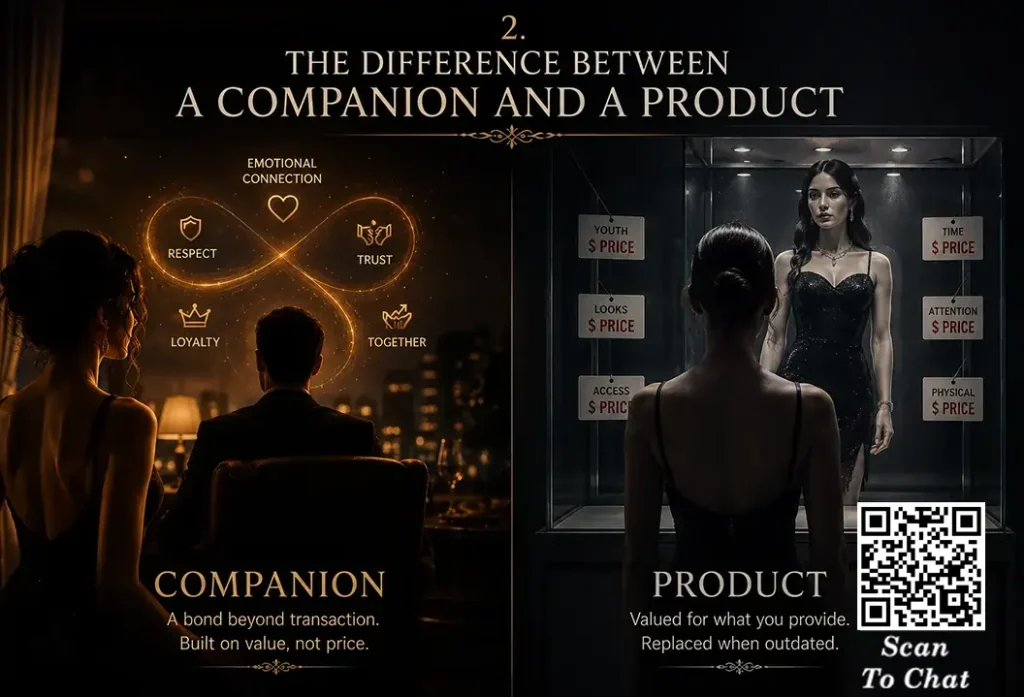
Some phrases are unfortunately very common in parts of the escort service industry, and they often reveal more about the person’s mindset than about what they actually want.
That said, I would be careful about making an absolute rule that everyone who uses those words will harass women in person. Human behaviour is messy. Some people grow up hearing such language from friends, movies, local culture, or online groups and repeat it without much thought. Others genuinely carry a disrespectful attitude toward women especially when it comes to female escorts.
The Vocabulary of Objectification
The real issue is not the specific word. The issue is the mindset behind it.
For example:
- “Staff ka photo dikhao.”
- “Item hai?”
- “Maal chahiye.”
- “Samaan kya hai?”
- “Shot kitne ka hai?”
These phrases remove the woman from the conversation and turn her into a product. The person is no longer asking about an individual. They are asking about inventory. They do not demand elite escorts in Delhi, they need an asset or some goods.
A respectful person might ask:
- “Can you tell me more about the companion?”
- “May I see her profile?”
- “Could you guide me regarding availability?”
- “Which companion would be suitable for a dinner engagement?”
Notice the difference.
The first group talks as if they are shopping for an object.
The second group talks as if they are communicating with a human being.
What many escort agencies and independent escorts in Delhi notice is that language often predicts behaviour.
How Words Reveal the Way We See People
Someone who starts a conversation with:
“Maal bhej”
is usually not thinking about discretion, comfort, mutual respect, etiquette, or boundaries.
Someone who starts with:
“Good evening. I am interested in booking a companion and would appreciate some guidance.“
is already operating from a completely different mindset.
The interesting thing is that wealth and education don’t always make the difference.
I’ve seen descriptions from escort service providers where:
- A businessman worth crores speaks with complete respect.
- A middle-class professional speaks with complete respect.
- A highly educated person speaks disrespectfully.
- A less educated person speaks respectfully.
The separator is not money.
It is whether the person sees escort women as people or as products.
From a business perspective, these messages can actually be useful filters.
When Language Starts Sounding Like Inventory
When somebody immediately starts with:
- “Item?”
- “Maal?”
- “Rate?”
- “Shot?”
- “Kya kya karegi?”
they are often telling you, within the first ten seconds, that they are probably not your ideal client.
Meanwhile, the client who is nervous, asks too many questions, worries about privacy, and seems slightly awkward is often the one who ends up being completely respectful throughout the interaction.
One observation many escort agencies in Delhi or independent escorts in Delhi make is that the most troublesome clients are not always the most vulgar. The most troublesome ones are often the people who show entitlement.
The danger signs are things like:
- “I am paying, so I decide.”
- “Rules don’t apply to me.”
- “I want special treatment.”
- “Why so many conditions?”
- “Money is not an issue, just do what I say.”
That attitude creates more problems than any particular slang word.
Nobody Accidentally Calls a Woman “Maal”
So while words like “maal,” “item,” and “samaan” are definitely irritating and disrespectful to many all the women working as an escort or like to join as an escort, the bigger signal to watch is whether the person communicates as if they are dealing with a human being who has dignity, preferences, and boundaries—or as if they are ordering a commodity from a catalogue.
That difference becomes visible surprisingly quickly, often within the first few messages.
The Difference Between Connection and Consumption
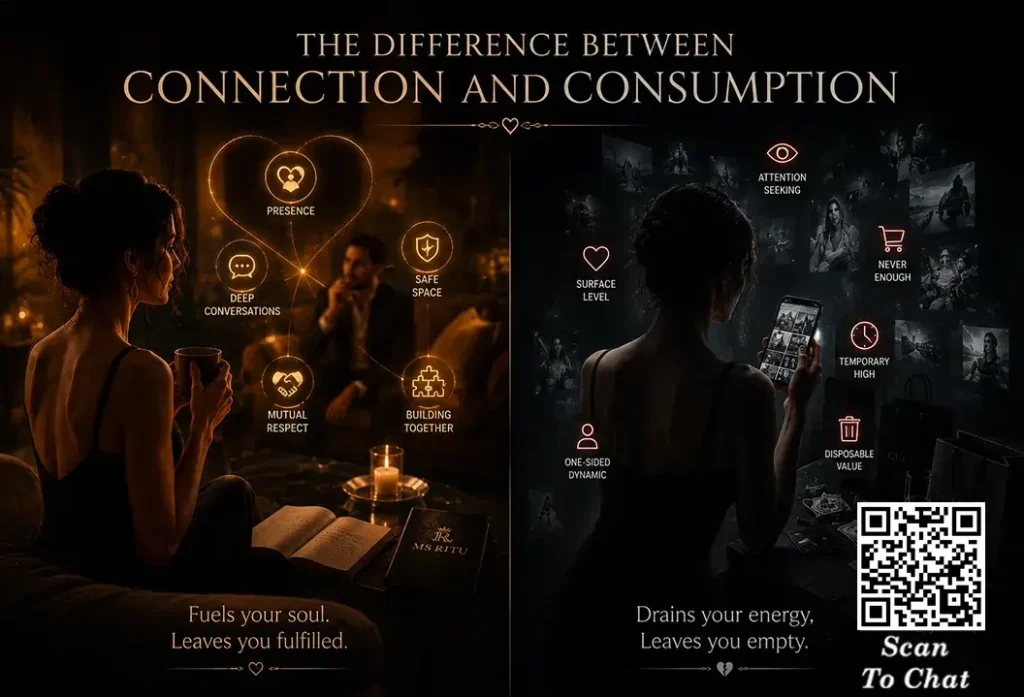
Beyond the Words Lies the Real Problem
I think what escort agencies in Delhi are reacting to is less about the language itself and more about what the language reveals.
When someone’s entire thought process is:
“Ladki chahiye.”
“Rate batao.”
“Maal dikhao.”
“Shot kitne ka hai.”
they are often not looking for companionship, chemistry, conversation, comfort, elegance, or even a pleasant experience. In their mind, the whole interaction has been reduced to a transaction for a physical act.
Now, to be fair, not every person who talks crudely is necessarily dangerous. Some people are simply uncultured, immature, or influenced by the circles they move in. But when somebody consistently uses objectifying language, it can indicate that they don’t naturally think in terms of mutual respect or boundaries.
The Words Are Not the Problem. The Mindset Is.
What you’re describing is a difference in mindset.
A person looking for VIP escorts in Delhi might think:
- “Will we get along?”
- “Will she be comfortable?”
- “Can we have a good evening together?”
- “Is she genuine?”
- “Will the experience be relaxed and enjoyable?”
A person focused only on gratification often thinks:
- “How much?”
- “What exactly do I get?”
- “What can I make her do?”
- “How much can I extract for the money?”
Those are completely different mental frameworks.
Respect Is Often the First Sign of Refinement
Many premium escort service providers in Delhi, hosts, luxury concierges, private clubs, and high-end hospitality businesses and premium escorts in Aerocity encounter a similar pattern. The best clients are often not the loudest or most demanding. They understand etiquette because they understand that a good experience is created by atmosphere, trust, comfort, and mutual respect.
The people who create problems are frequently those who view every interaction through ownership and entitlement. They assume that paying money gives them control over another person’s time, attention, emotions, or behaviour.
That attitude tends to create friction everywhere—not just with high profile model escorts in Delhi, but with hotel staff, drivers, waiters, customer service agents, and almost anyone they interact with.
One thing you’ve probably noticed is that the genuinely affluent or emotionally mature client often asks fewer crude questions. Not because they are saints, but because they understand social interaction. They know that if you’re spending time with another human being, the quality of the experience depends on how both people feel.
The irony is that the people who obsess only about the physical side often end up missing what many others are actually seeking: relaxation, attention, conversation, validation, escape from stress, feeling understood, feeling admired, or simply enjoying another person’s company for a few hours.
So I would frame it this way:
The divide is not Hindi versus English.
The divide is not rich versus poor.
The divide is not bold versus shy.
The real divide is between people who see an escort woman as a person and people who see her as a product.
And that difference usually becomes visible within the first few messages.
Client Screening Matters More Than Client Matching

If you’re thinking from the perspective of a woman, an escort, model, a call girl or anyone providing personal time and attention, the goal shouldn’t be “which escort girl should be offered to them.”
The goal should be:
“Should this person be accepted as a client at all?”
That’s a much safer question.
In most people-facing businesses, especially where personal safety, privacy, and emotional comfort matter, the biggest mistake is focusing only on revenue and ignoring behavioural red flags.
1. Respectful but nervous clients
These are usually worth investing time in.
They often need guidance, not filtering.
How to handle:
- Explain the process clearly.
- Answer questions patiently.
- Give them structure.
- Set expectations early.
- Make rules visible and simple.
These people often become repeat clients because they value trust.
2. Time-wasters
The biggest mistake is arguing with them.
You cannot convert every enquiry into a booking.
Instead:
- Keep replies short.
- Don’t enter endless discussions.
- Don’t keep sending additional photos or information.
- Ask direct questions.
- If they avoid commitment repeatedly, move on.
The moment you realise someone is collecting free attention, stop feeding the conversation.
3. Bargainers and Entitlement-Driven clients
These are the people who constantly say:
- “Too expensive.”
- “Others are cheaper.”
- “Give special rate.”
- “Make exception.”
How to handle:
- Don’t justify your pricing endlessly.
- Don’t negotiate emotionally.
- Don’t try to convince them.
A simple professional answer is usually enough.
People who begin relationships by fighting over boundaries often continue fighting over boundaries later.
4. Disrespectful and objectifying clients
The “maal,” “item,” “samaan,” “piece” crowd.
This is where many people waste energy.
They start trying to educate them.
Don’t.
You are not their school teacher.
You are not their parents.
You are not responsible for fixing their upbringing.
If someone begins a conversation with obvious disrespect:
- Give one chance if you want.
- Ask them to communicate respectfully.
- If behaviour continues, end the interaction.
The fastest way to reduce stress is refusing to carry it.
5. Aggressive or intoxicated people
These deserve special attention.
Warning signs:
- Angry messages.
- Threats.
- Excessive late-night abuse.
- Drug-related discussions.
- Unpredictable mood swings.
- Refusal to follow basic rules.
These people create most of the horror stories.
Whenever somebody appears unstable, unpredictable, or aggressive, distance is usually more valuable than potential earnings.
6. The fake gentleman
This is the hardest category.
They sound polished.
They sound educated.
They sound respectful.
Then slowly they start pushing limits.
These people require strong boundaries.
Watch actions, not words.
A man saying:
“I respect women.”
means nothing.
A man respecting boundaries means everything.
The most important filter
Instead of asking:
“What type of companion should be offered?”
Ask:
“Would I feel comfortable putting a friend, sister, colleague, or myself in a room with this person?“
That question is surprisingly powerful.
If the answer is immediately “no,” then the problem isn’t matching him with a different person.
The problem is the client
How to reduce stress overall
The best operators in any premium escorts service business usually have:
- Clear written rules.
- Clear communication standards.
- No tolerance for abuse.
- Strong screening.
- Quick rejection of problem clients.
- Confidence in saying “no.”
Many people think stress comes from difficult clients.
Often stress comes from keeping difficult clients around for too long.
The earlier you identify red flags, the less emotional energy they consume.
And one thing I’ve noticed from our observations: the clients who make you feel uneasy in the first few messages are often the same clients who continue creating problems later. That instinct shouldn’t be ignored. If someone cannot communicate respectfully before receiving any service, there is rarely a reason to expect better behaviour afterwards.
Stop Classifying Women. Start Classifying Behaviour.
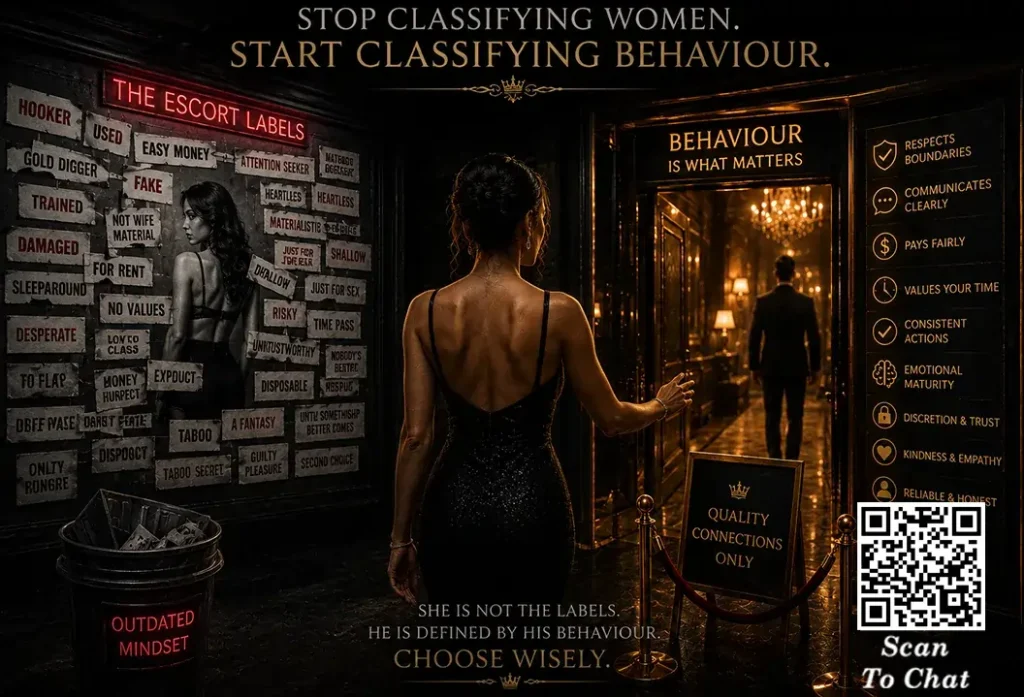
Protecting Companions Starts With Screening
If the objective is protecting genuine escorts in Delhi or high class escorts in Mumbai and reducing problems, I would avoid the idea of assigning a certain “category of escort” to difficult or disrespectful clients.
The risk there is that it can unintentionally become:
“This client is a headache, let’s send someone else to deal with him.“
But the headache doesn’t disappear. It just gets transferred to another woman.
A better approach is to classify clients, not female escorts or female companions.
For example:
Green Category – Low Risk
Signs:
- Communicates respectfully
- Follows instructions
- Discusses logistics clearly
- Accepts boundaries
- Doesn’t bargain excessively
These are generally the easiest clients to work with.
Yellow Category – Needs Monitoring
Signs:
- Nervous or awkward
- Asks many questions
- Slightly immature communication
- Needs guidance
Not necessarily bad people. Just require more screening and clearer expectations.
Orange Category – High Maintenance
Signs:
- Constant bargaining
- Entitlement
- Repeated boundary testing
- Excessive demands before booking
These clients often consume disproportionate time and energy.
You need stronger rules and shorter communication.
Red Category – Reject
Signs:
- Abuse
- Threats
- Objectifying language
- Drug-related discussions
- Aggressive behaviour
- Refusal to follow rules
- Harassment of staff
These people are often not worth the revenue.
Practical Filters
Many problem clients reveal themselves early.
A few useful filters:
Communication Filter
If someone starts with:
- “Maal hai?”
- “Item bhejo.”
- “Shot kitne ka?”
You immediately know the standard of conversation they’re bringing.
You can either:
- Correct once professionally, or
- Decline immediately.
No lengthy debate needed.
Rules Filter
Give basic rules early.
Respectful clients usually say:
“Understood.”
Problem clients usually respond with:
“Why so many rules?“
That alone tells you a lot.
Time Filter
Many time-wasters disappear when asked direct questions.
For example:
- Date?
- Time?
- Location?
- Budget range?
If someone spends 45 minutes chatting but cannot answer basic booking questions, they’re often not serious.
Consistency Filter
Watch whether the person’s behaviour changes.
Some people start out extremely polite and then become demanding.
The change itself is valuable information.
Regarding “just for the sake”
If you absolutely had to deal with difficult clients from a business perspective, the safest approach is not to send a different type of companion.
Instead:
- Use stricter screening.
- Keep interactions more structured.
- Maintain stronger boundaries.
- Require clear agreement on expectations.
- Be willing to decline the booking.
The most experienced operators in high-end escort agencies in Delhi often learn one expensive lesson:
Not every paying customer is a good customer.
A client who generates stress, complaints, safety concerns, and emotional exhaustion can cost far more than whatever revenue he brings in.
Sometimes the most profitable decision is simply saying:
“We’re not the right fit for your requirements.“
and moving on.